

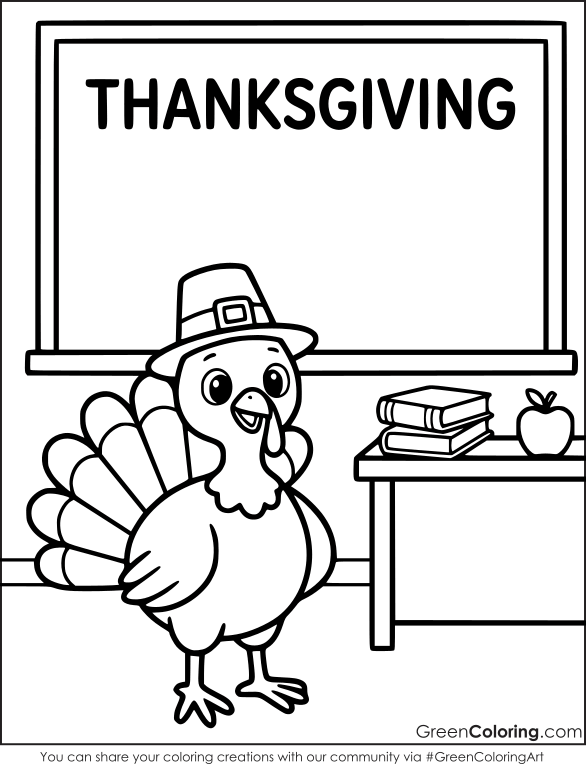
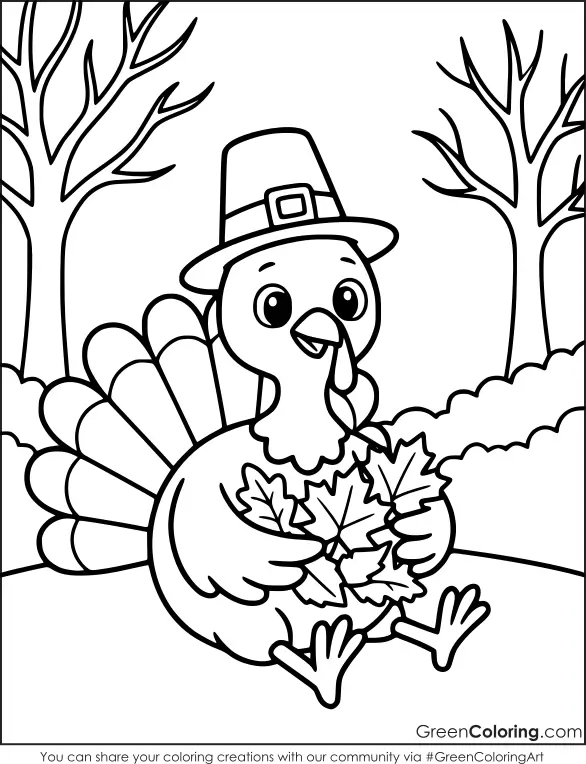
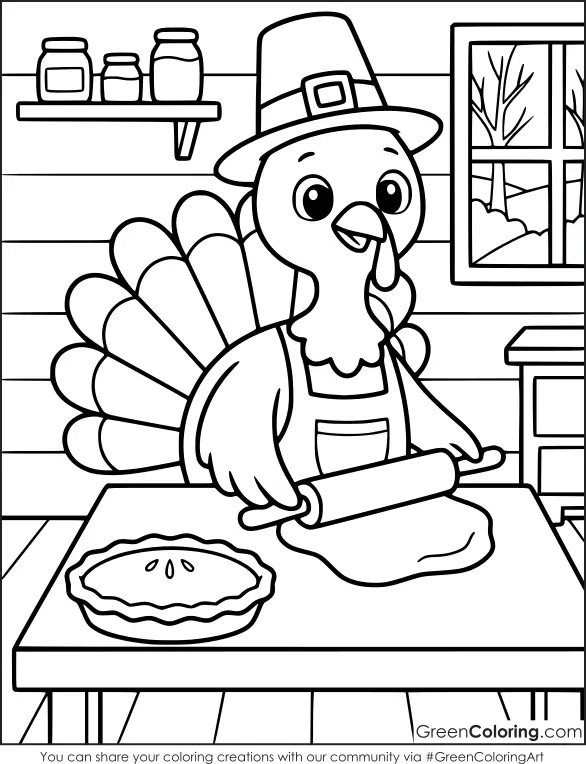
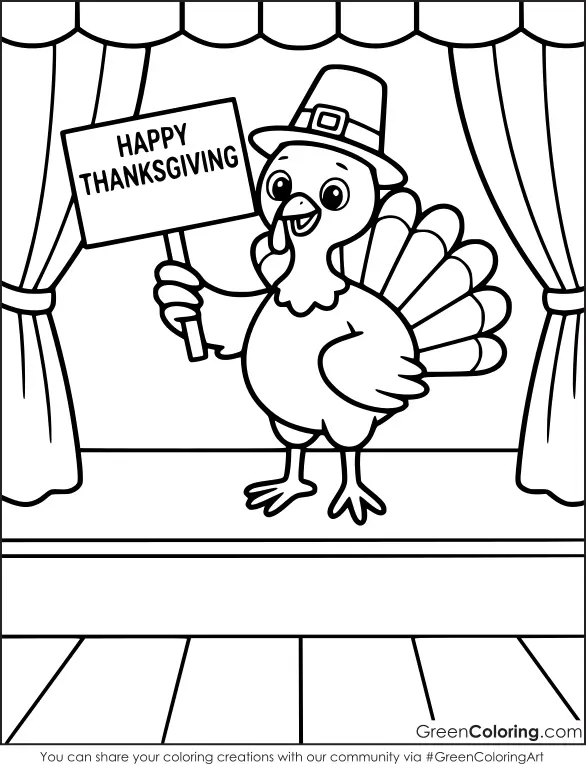
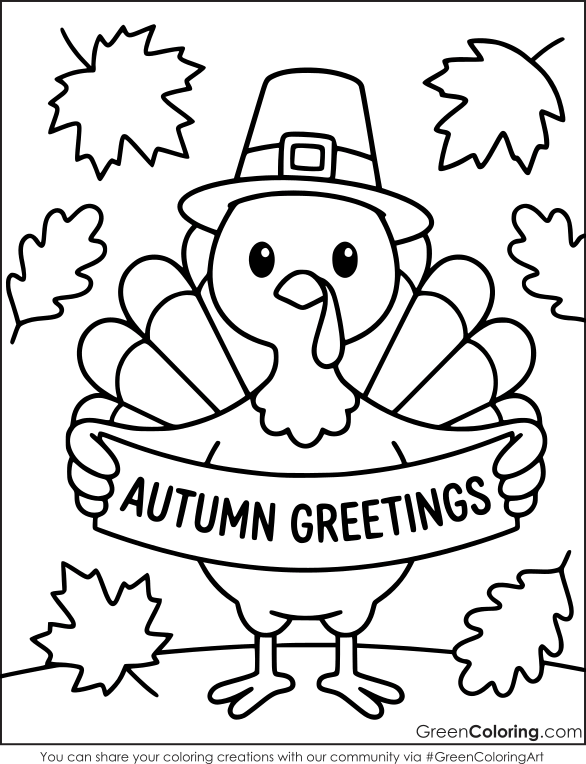
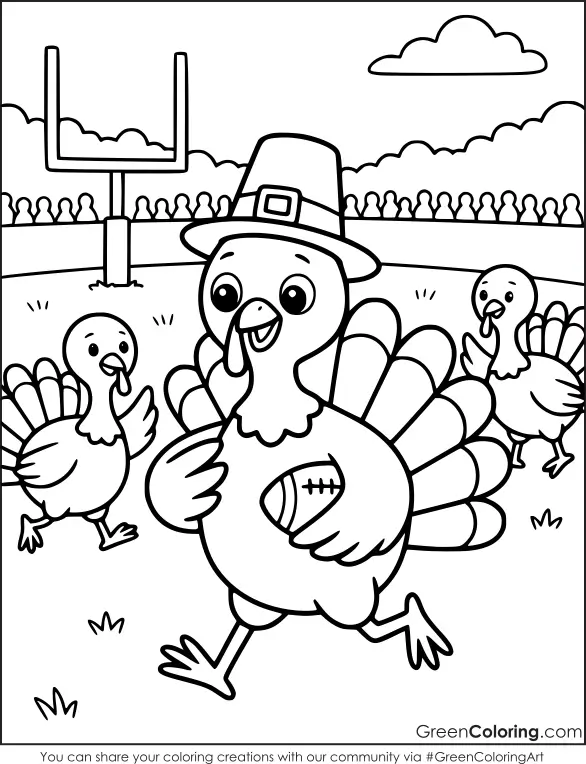
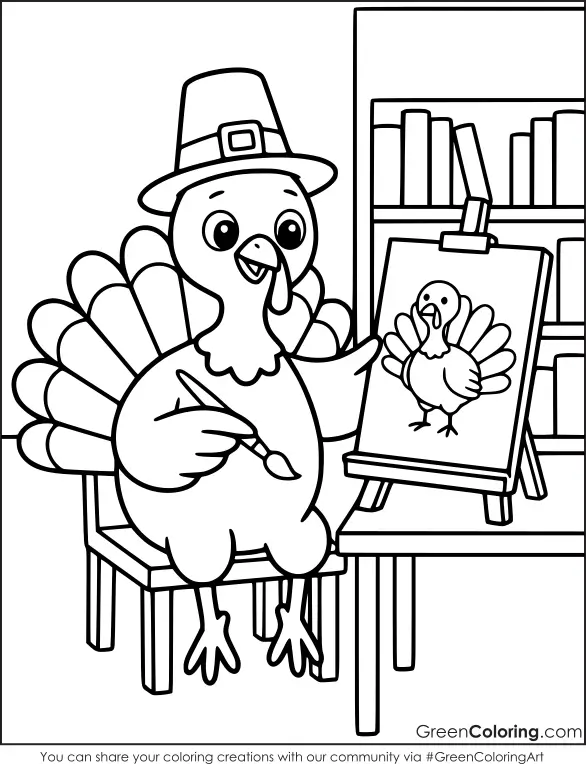
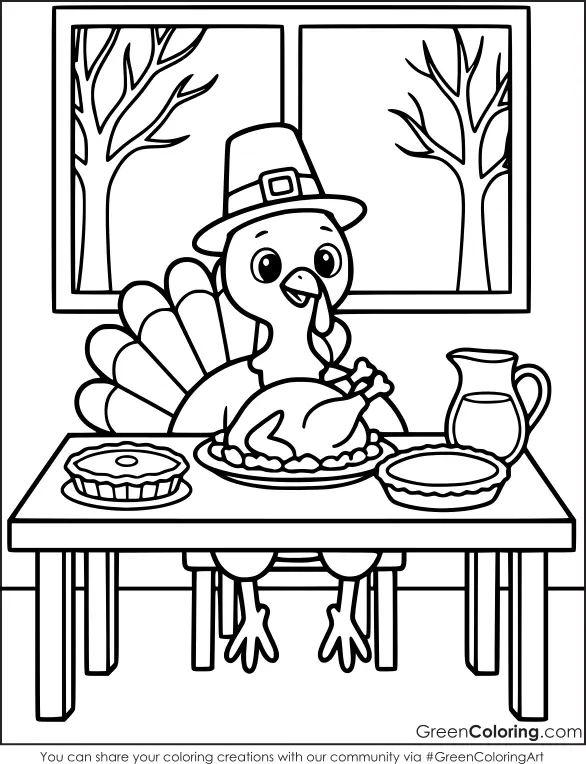
These turkey coloring pages are free printable PDF sheets full of cute, cheerful turkeys, from silly hat-wearers to cozy Thanksgiving scenes. They’re made for parents and teachers who want a quick November activity that can also turn into a craft.
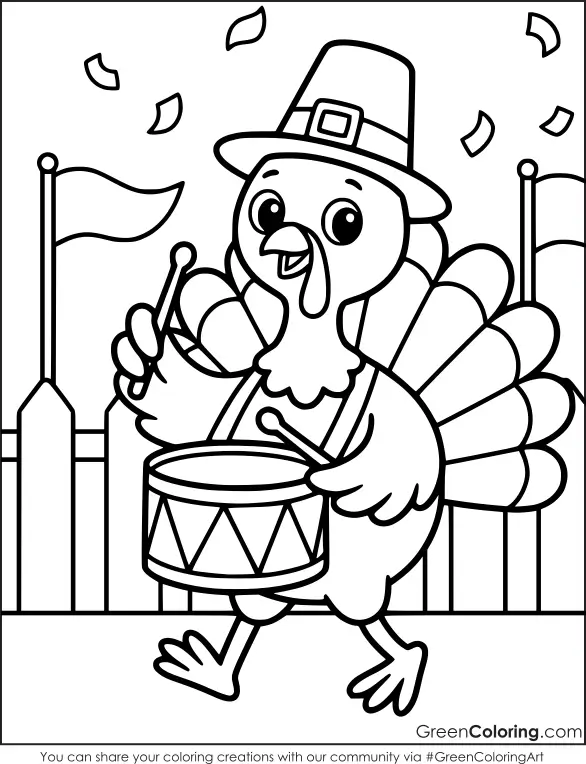
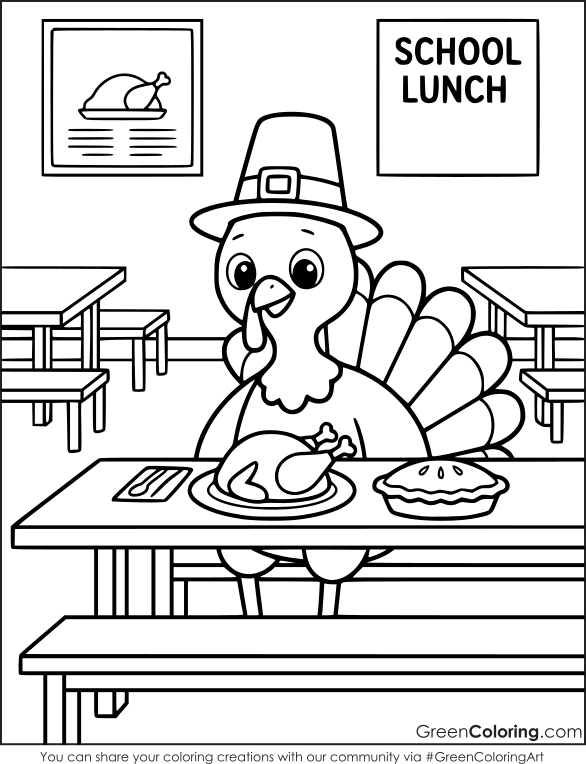
Back when I taught at a private school, I started every November bird lesson by playing the gobble from Cornell Lab’s wild turkey recordings. The room went silent for about a second, roughly the length of one gobble, and then twenty kids tried to copy it at once. That mix of curiosity and silliness is what I wanted on paper, so I drew turkeys that look friendly and a little goofy.
I worked on them over a few evenings at our kitchen table. Mike, who’s seven, leaned over my shoulder every few minutes to vote on hats (“Bigger. Way bigger.”), and Lisa wanted to know why none of the turkeys were purple. I told her that’s what crayons are for, and she took it as a personal mission.
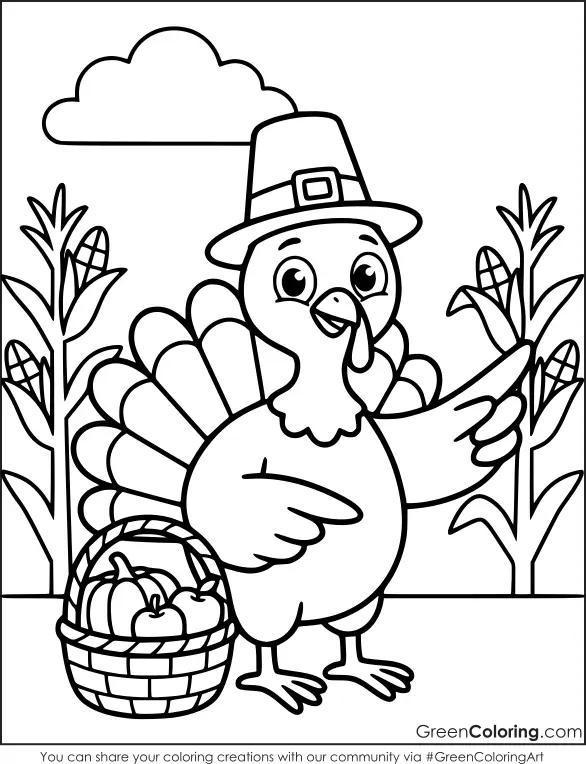
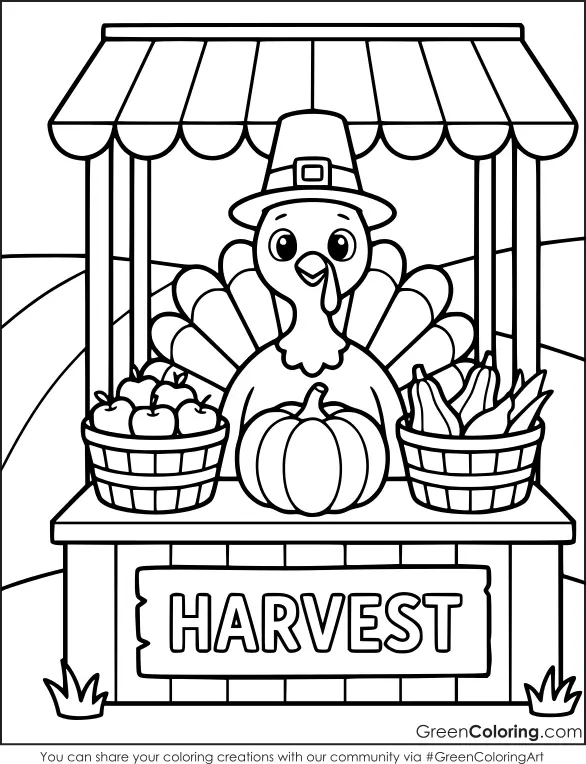
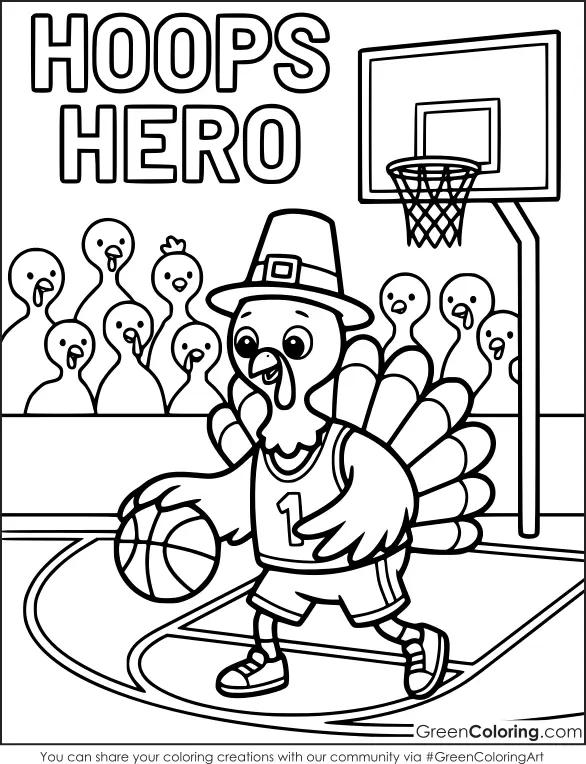
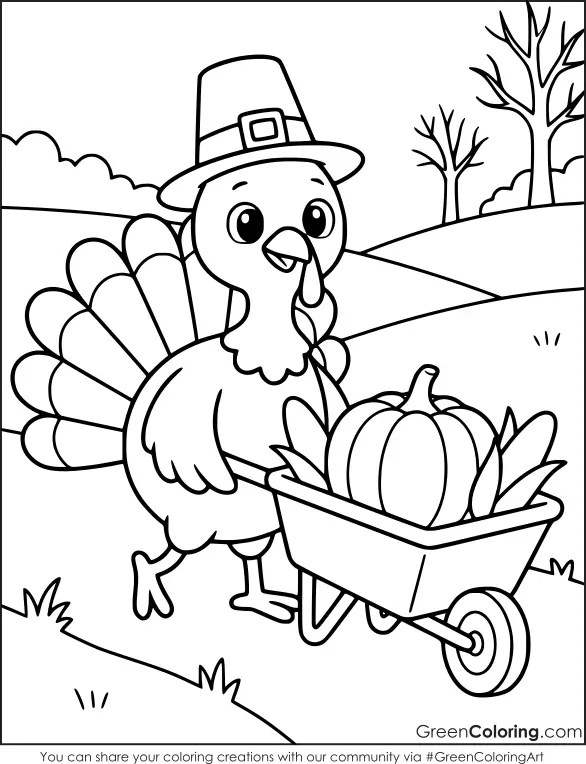
A Quick Look Inside These Turkey Coloring Pages
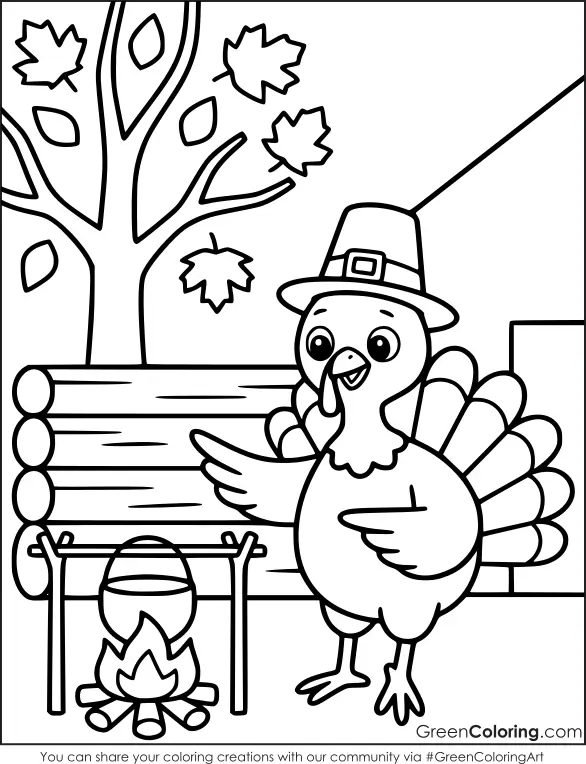
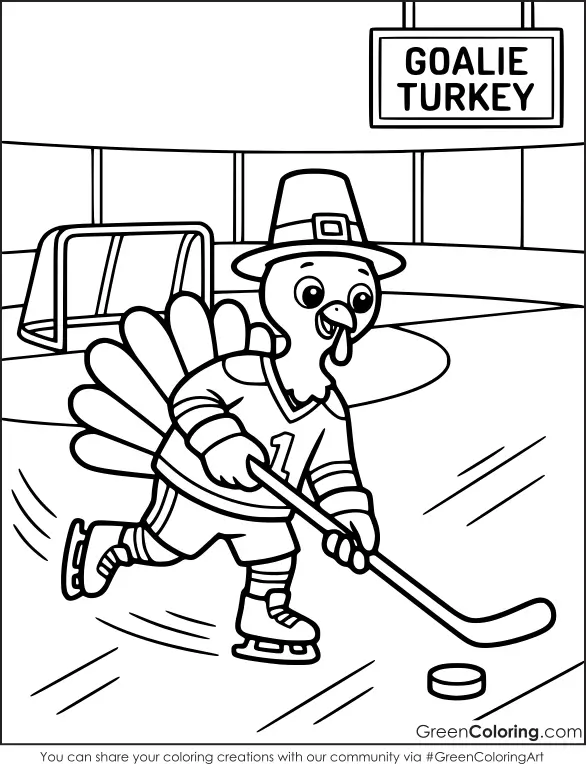
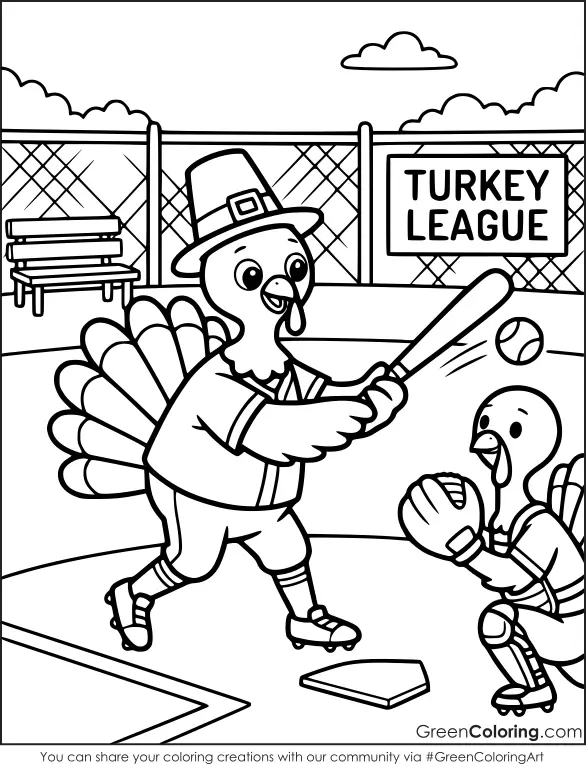
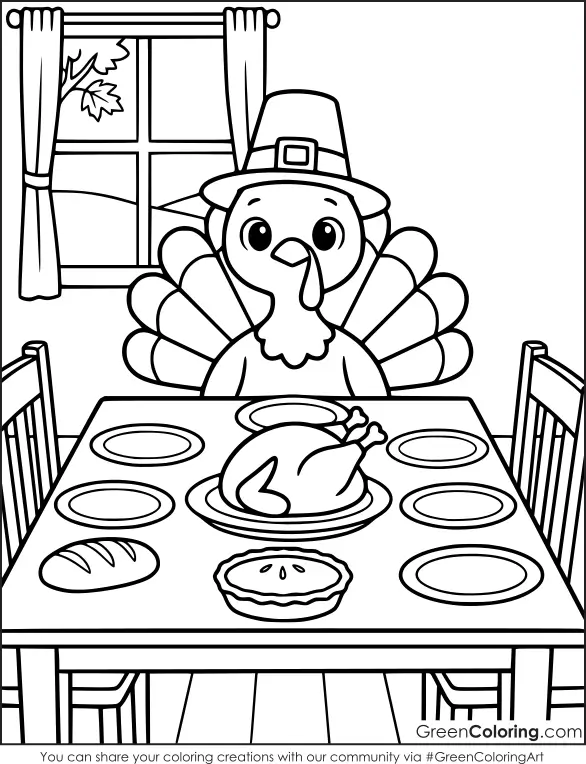
Some turkeys wear hats, some go bareheaded, and a few appear in bigger scenes: surrounded by pumpkins near a tree, in a school setting for Thanksgiving, or at an indoor celebration. The cute style suits preschool and kindergarten, while the scenes give older kids more to color. I added the school and party pages on purpose, because for most children Thanksgiving happens in two places, the classroom and the family table. The pages sit in small groups between the crafts below, and each image opens its own PDF. For more holiday designs, see our Thanksgiving coloring pages.
6 Crafts for Kids Using Turkey Coloring Pages
Each idea starts with one of the turkey coloring pages and takes less than an hour with supplies most homes and classrooms already have. There’s a bit of science, some storytelling, a table decoration, and one very practical chart for the big day.
1. Turkey Hat Spinner
A thaumatrope is a paper disc with a picture on each side. Spin it fast on two strings and the pictures merge, so a bareheaded turkey on the front suddenly “wears” the hat drawn on the back. It’s a toy that’s about 200 years old, and it still gets a gasp.
Our first one flopped. Lisa flipped the disc like a book page before drawing the hat, and when Mike spun it, an upside-down hat floated near the turkey’s feet. He thought that was the best part, but round two worked.
Prep note: Print one of the turkey coloring pages at 50% scale so the turkey fits inside a 4-inch circle. For a class of little ones, pre-cut the circles.
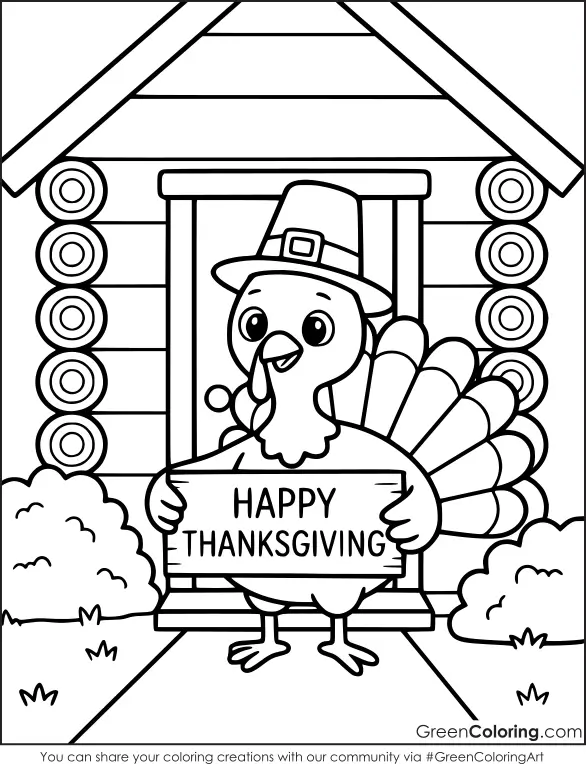
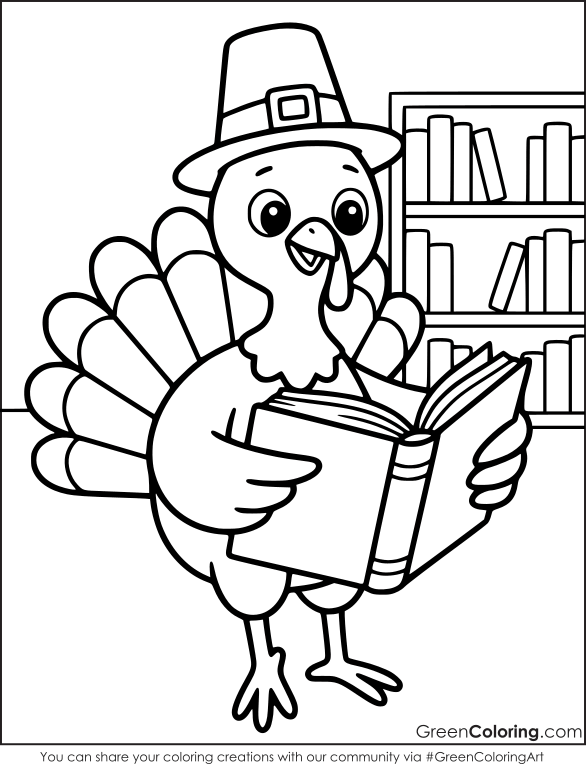
Materials Needed:
- 1 printable turkey page with a turkey that isn’t wearing a hat, printed at 50%
- 1 sheet of white cardstock
- A round lid or cup about 4 inches (10 cm) across
- Pencil, plus crayons or markers
- Glue stick
- Child-safe scissors
- Hole punch
- 2 pieces of string or yarn, about 12 inches each
Steps:
- Color the small turkey with strong, dark colors.
- Center the lid over the turkey, trace around it, and cut out the circle.
- Trace a second 4-inch circle on cardstock and cut it out.
- Glue the circles back to back, turkey facing out, and press flat for a minute.
- Flip the disc top to bottom, like a wall calendar, and draw a hat where the turkey’s head sits on the front.
- Punch one hole on the left edge and one on the right, level with the center and about 1/4 inch in (adult help for little hands).
- Tie a string through each hole with a double knot.
- Hold a string in each hand, twirl the disc 15 to 20 times, then pull the strings tight to spin it.
Science Moment: Your eyes hold on to each picture for a split second, so when both sides flash past quickly, your brain blends them into one image. The Victoria and Albert Museum’s thaumatrope set is a boxed set from around 1850, with scenes like a boy being thrown off a donkey. A bird in a cage was another classic design, and it works exactly like our turkey and hat.
Smart Tip: Sketch the hat lightly in pencil and give the disc one test spin before coloring it. Pale colors also tend to vanish when it spins, which is why step 1 asks for dark ones.
2. Lift-the-Flap “Where’s the Turkey?”
Any of the scene pages among these turkey coloring pages can become a hiding game for preschoolers. A small turkey hides under paper flaps, and the same question sits on every flap, so early readers get a short line they can “read” on their own after a round or two.
Prep note: Print the hat-wearing turkey at about 30% scale so it comes out roughly 2.5 inches tall and fits under a 3-by-4-inch flap. For a classroom, pre-cut the flaps too.
Materials Needed:
- 1 turkey scene page, printed at full size (the game board)
- 1 turkey coloring page with a hat, printed at about 30%
- Crayons or markers
- 2 sheets of construction paper in fall colors
- Child-safe scissors
- Clear tape
- Painter’s tape or masking tape
- Marker
Steps:
- Color the scene page completely to make the game board.
- Color the small hat-wearing turkey and cut it out.
- Cut 5 flaps from construction paper, each about 3 by 4 inches.
- Write “Is the turkey here?” on the front of every flap.
- Tape each flap to the board along its top edge only, so it lifts like a door.
- Stick a small loop of painter’s tape on the back of the cut-out turkey.
- Hide the turkey under one flap while the seeker covers their eyes, then let them lift flaps and read the question each time.
Classroom Idea: Slide the board into a sheet protector and tape the flaps to the outside, and it’ll survive a full week of learning centers. If the board looks bare, glue on a leaf or squirrel cut from our fall coloring pages and add a flap over each one.
3. Thanksgiving Napkin Rings from Turkey Coloring Pages
Small turkeys wrapped around rolled napkins make a holiday table look finished. Each ring also hides a question on the inside, so dinner comes with its own conversation starters.
Lisa took charge of the questions on our test run last weekend and wrote every one in purple gel pen. Her best, “Which turkey hat would you wear to school?” kept the grown-ups arguing for ten minutes.
Prep note: Print the turkeys at about 25% scale so each one comes out roughly 2 inches tall. Most printers put one small turkey on each sheet, so plan one sheet per guest and save the leftover paper for scrap.
Materials Needed:
- 1 turkey coloring sheet per guest, printed at about 25%
- Crayons, markers, or colored pencils
- Cardstock, cut into strips 1.5 by 6 inches (one per guest)
- Child-safe scissors
- Clear tape
- White school glue
- Pen or fine marker
- Cloth or paper napkins
Steps:
- Color the small turkeys and cut them out, leaving a thin white border.
- Write one dinner question on the plain side of each cardstock strip.
- Roll a strip into a ring with the question inside, overlapping the ends by 1 inch.
- Tape the overlap on the inside and outside so the ring holds its shape.
- Glue a turkey over the seam with white glue, letting its head peek above the top edge, and let it dry for 15 minutes.
- Roll each napkin and slide it through a ring.
Conversation Idea: A few questions that worked at our table: “What’s something you learned this fall?” “Which turkey hat would you wear to school?” and “If our turkey could talk, what would it ask for?”
Easy Variation: Mix in a few small pumpkins from our pumpkin coloring pages so every place setting looks a little different.
4. Strutting Turkey with a Paper Tail Fan
A male wild turkey showing off is quite a sight. According to the Cornell Lab’s turkey ID guide, males puff up their body feathers, raise their tails into a fan, and strut slowly while gobbling, mostly in early spring. This craft adds a folding fan behind a colored turkey, so kids can switch between “relaxed” and “strutting.”
Mike tested his by marching around the kitchen with his chest puffed out and the fan held high. When Lisa asked if the turkey had a name, he said “Sir Gobbles” without slowing down.
Materials Needed:
- 1 turkey coloring page
- 1 sheet of printer paper, 8.5 by 11 inches
- Crayons or markers
- Child-safe scissors
- Clear tape
- 1 craft stick
- White school glue
Steps:
- Color one of the turkey coloring pages and cut out the turkey.
- Turn the printer paper sideways and color wide stripes across it, parallel to the long edges.
- Starting at one short edge, fold the paper back and forth in 1/2-inch pleats.
- Pinch the bottom end together and wrap tape around it, about 1 inch up.
- Tape the pinched end to the back of the turkey, low on the body, so the fan rises behind it.
- Glue a craft stick to the back as a handle and let it dry for 10 minutes.
- Spread the fan open to make the turkey strut, then squeeze it closed to let him relax.
Make It Harder: For a realistic wild turkey, older kids can color the fan dark brown with darker bands and give the top edge a rusty or white tip, the way real tail feathers look.
5. A Wild Turkey Science Poster with Turkey Coloring Pages
Cute turkeys make a good hook for real biology. Kids color a turkey from these turkey coloring pages, then label the odd body parts that make wild turkeys look the way they do, drawing in any part the picture doesn’t show.
With a group, split the five labels among small teams. Each team becomes the expert on one part and teaches it to everyone else. Kids tend to remember “caruncles” far better after a classmate explains it with a very serious face.
Materials Needed:
- 1 turkey coloring page
- Crayons or markers
- 1 sheet of construction paper, 12 by 18 inches
- 5 index cards
- Glue stick
- Child-safe scissors
- Pencil and ruler
Steps:
- Color the turkey and cut it out, leaving a little white edge.
- Glue it to the middle of the construction paper.
- Write one word at the top of each card: snood, wattle, caruncles, beard, spurs.
- Copy a short definition under each word (see the Learning Idea below).
- Glue the cards around the turkey, leaving space between them.
- Draw a ruler-straight arrow from each card to the right spot, sketching in the part if the turkey doesn’t have it.
Learning Idea: Here are simple definitions based on PBS Nature’s wild turkey fact sheet: the snood is a fleshy flap hanging from the beak, the wattle is a flap of skin under the chin, caruncles are fleshy bumps on the head and throat, the beard is a patch of coarse feathers on the chest (usually on males), and spurs are bony spikes on the back of the lower legs. For a bonus fact at the bottom of the poster: one wild turkey has about 5,000 to 6,000 feathers.
6. Thanksgiving Day Helper Chart
Kids want to help on Thanksgiving; they just don’t always know how. Pick any of the turkey coloring pages (a turkey in a hat looks especially official) and turn it into a job board, with each task written on a clothespin that kids clip to their sleeve. It works just as well for a classroom party.
Emily came up with the idea after one too many holidays where everyone tried to help with the same basket of rolls. We tried the chart at Sunday dinner last weekend, and Mike claimed “coat collector,” even though Grandma was the only guest with a coat.
Prep note: For kids who aren’t reading yet, add a tiny drawing next to each job.
Materials Needed:
- 1 turkey coloring page
- Crayons or markers
- 1 sheet of cardstock
- Glue stick
- Child-safe scissors
- 6 to 8 wooden spring clothespins
- Fine-tip permanent marker (for the adult)
- 1 envelope
- Tape
Steps:
- Color the turkey and cut around it, leaving about a 1/2-inch border.
- Glue it onto the cardstock and trim the cardstock to the same shape.
- Write one job on each clothespin with the permanent marker (adult step).
- Clip the clothespins around the edges of the chart.
- Write “Done!” on the envelope.
- Hang the chart at kid height on the fridge or classroom door, with the envelope taped underneath.
- Kids pick a job, clip it to a sleeve, and drop the clothespin in the envelope when finished.
Smart Tip: Good jobs for young helpers include napkin folder, coat collector, roll basket carrier, greeter, and crumb sweeper.
Bring a Few Turkeys to Your Table
Pick a few of these turkey coloring pages, print them on a quiet afternoon, and see which craft your kids grab first. At our house, the hat spinner hasn’t left the kitchen counter all week. And when the holiday rush is over and everyone needs a slower afternoon, our cozy coloring pages with little cabins and sleepy animals make a nice next step.
Leave a Reply